
✦ Premium Experience
Dublin & Wicklow 2-Day Private Tour
Two Days. One City, One Mountain Range, Zero Strangers.
Dublin on Day 1. The Wicklow Mountains on Day 2. Your private vehicle, your pace, and a driver-guide who has covered every road between the two since 2010.
- 2-Day Private Tour
- NCDA Certified
- Free Cancellation
- 4.9 Star Rated
Tour Highlights and What's Included
Dublin has more in it than most visitors realise. Trinity College, the Book of Kells, Kilmainham Gaol, the Liberties, the Docklands — you could spend a full week and still find new corners. Day 1 gives you a proper guided introduction to the highlights that match your interests, not a fixed checklist.
Day 2 takes you south into County Wicklow. Within 30 minutes of Dublin city centre, the landscape shifts completely. The Wicklow Mountains National Park, the glacial valley at Glendalough, and the formal gardens of Powerscourt Estate feel like they belong to a different island entirely.
This 2-day Dublin tour suits first-time visitors who want both the capital and the countryside without renting a car or navigating bus routes.
- Private vehicle, your group only, door-to-door from your Dublin hotel
- Guided city tour of Dublin on Day 1 — tailored to your interests
- Trinity College and Georgian Dublin walk
- Kilmainham Gaol exterior and guided explanation
- Glendalough Monastic City — 2 hours free time
- Powerscourt Estate and Waterfall visit
- Sally Gap mountain road scenic drive
Why Book Our 2-Day Dublin Tour
Most visitors to Dublin spend their days jumping between the same four or five attractions, queuing, and eating near Temple Bar because it is the easiest option. A private guide changes what you actually see.
On Day 1, your guide takes you to places locals use — the right viewpoints, the cafes worth sitting in, the street corners with stories attached. You still see Trinity College and the Guinness Storehouse if that is on your list. But you also understand the city rather than just photographing it.
Day 2 in Wicklow is the kind of morning that makes people say they had no idea Ireland looked like this. The Wicklow Mountains sit just outside the capital and see a fraction of the visitors that the west coast attracts.
Want to add more of Ireland? Our Giants Causeway & Belfast 2-Day Tour takes you north across the border. For the west coast, the Cliffs of Moher & Galway 2-Day Tour covers the Wild Atlantic Way. Browse all our private 2-day tours from Dublin to compare.
Day-by-Day Itinerary
DAY 1 — Dublin City Private Guided Tour
9:00 AM — Dublin Pick-Up and Morning Orientation
We collect you from your hotel and begin with a short drive covering the geography of the city — the Liffey, the two canals, the north and south sides, and how they developed over 300 years. Understanding the layout makes everything else make sense.
10:00 AM — Trinity College and College Green
We stop at Trinity College Dublin, founded in 1592. Your guide covers the history of the campus and the significance of the Book of Kells, dating to around 800 AD. Entry to the Book of Kells exhibition is optional (fee applies, pre-booking recommended).
11:00 AM — Grafton Street, St Stephen’s Green and Georgian Dublin
We walk through Grafton Street into St Stephen’s Green. Your guide points out the architecture of the surrounding Georgian squares — Merrion Square, Fitzwilliam Square — and explains the social history of who lived in these houses and what happened to them.
12:30 PM — Kilmainham Gaol and the 1916 Rising
Kilmainham Gaol is one of the most significant sites in Irish history. The leaders of the 1916 Easter Rising were executed in its stonebreaker’s yard. Your guide covers the Rising, the War of Independence, and the treaty that followed. Interior tours are available (pre-booking required, approximately 1 hour).
2:30 PM — The Liberties, Guinness Storehouse and Irish Whiskey
We drive through The Liberties, Dublin’s oldest neighbourhood and home to the Guinness Brewery since 1759. The Guinness Storehouse is the most visited paid attraction in Ireland (self-guided, entry fee applies). Alternatively, your guide can take you to the Teeling Distillery for a smaller experience.
5:00 PM — Temple Bar and Evening Free Time
We finish with a walk through Temple Bar and across the Ha’penny Bridge. Free time for dinner — your guide recommends based on your preferences and budget.
DAY 2 — Wicklow Mountains, Glendalough and Powerscourt
9:00 AM — Dublin Hotel Pick-Up and Drive South
We collect you from your hotel and head south through County Dublin into County Wicklow. The change in landscape begins within 20 minutes of the city.
10:00 AM — Sally Gap Mountain Road
We drive the Sally Gap road at 493 metres above sea level. Your guide explains how this landscape formed after the last Ice Age. Lough Tay — known as the Guinness Lake for its dark peat water and white sand beach — is one of the most photographed spots in Wicklow.
11:00 AM — Glendalough — 2 Hours Free Time
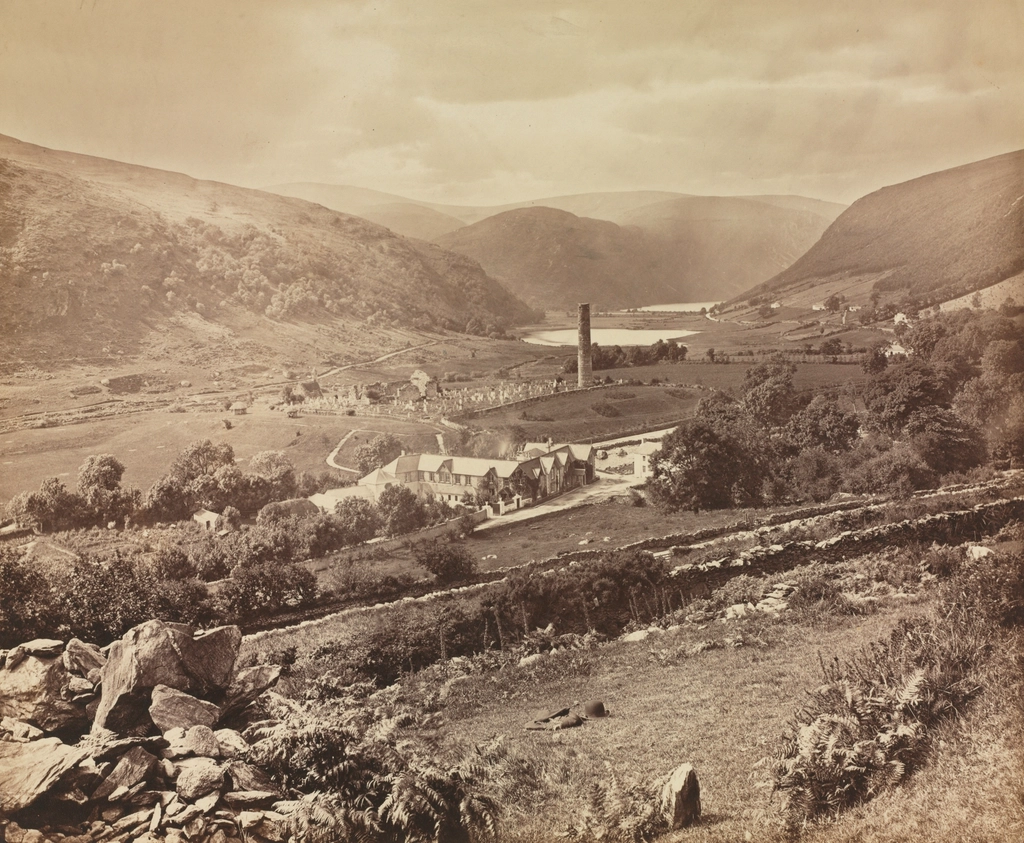
Glendalough is a 6th-century monastic settlement founded by St Kevin in a glacial valley between two lakes. The round tower, cathedral ruins, and St Kevin’s Kitchen have survived over 1,400 years. Walk the Green Road lake trail for the best views with the fewest crowds.
1:30 PM — Powerscourt Estate and Waterfall
Powerscourt Estate contains some of the finest formal gardens in Europe, designed against the backdrop of the Great Sugarloaf mountain. At 121 metres, Powerscourt Waterfall is the highest in Ireland. Entry fee applies.
4:00 PM — Enniskerry Village and Return to Dublin
We pass through Enniskerry, one of Ireland’s prettiest estate villages, before heading north. Most groups are back at their hotel between 5:30 and 6:00 PM.
Pricing and What's Included
✓ What's Included
- Door-to-door hotel pick-up and drop-off both mornings, Dublin city centre
- Luxury private Mercedes with USB charging and onboard WiFi
- Professional licensed driver-guide for both full days
- Glendalough site access
- Powerscourt Estate and Waterfall entry
- Sally Gap and Wicklow Mountains scenic drive
- Bottled water on board throughout both days
✗ What's NOT Included
- Book of Kells exhibition (~€18 per adult, optional)
- Kilmainham Gaol interior tour (~€8, pre-booking required, optional)
- Guinness Storehouse entry (~€25+, optional)
- Meals and drinks during free time both days
- Gratuities for your guide
About Glendalough
Glendalough — from the Irish Gleann Dá Loch, meaning Valley of Two Lakes — was founded by St Kevin in the 6th century. It grew into one of the most important monastic cities in early medieval Ireland, attracting scholars from across Europe at a time when Ireland was known as the island of saints and scholars. The round tower stands 33 metres tall and dates to the 10th or 11th century — built as a bell tower and a place of refuge during Viking raids. Three pilgrimages to Glendalough were considered equal to one pilgrimage to Rome.
Best Time to Visit Glendalough and Wicklow
May through September gives the best walking conditions and the longest light in the valley. The rhododendrons on the Glendalough lake trail bloom in May and June. October brings autumn colour to the valley that rivals anything you would see in New England. Spring visits in March and April find the site before the summer coach tours arrive.
Why Take a Tour Instead of Driving Yourself
Glendalough is 55 kilometres from Dublin city centre and the Sally Gap road is narrow with passing places. Powerscourt Waterfall parking fills quickly on summer weekends. Dublin city parking on Day 1 adds stress and cost that compounds throughout the day.
A private guide handles all of that. On the city day especially, knowing when the Book of Kells queue peaks and which Kilmainham Gaol entrance to use saves time that matters over a full day. The commentary also transforms what you are looking at. St Kevin’s reasons for choosing that particular valley, the design logic behind Georgian Dublin’s streets — none of that comes from a placard. Browse our full range of private tours from Dublin to compare all available routes.
Frequently Asked Questions
Is this tour suitable for first-time visitors to Dublin?
Yes. The two-day format is designed for first-time visitors who want both the capital and the countryside. Your guide adapts the Day 1 city itinerary based on what interests your group most, history, culture, food, or architecture.
Can we visit the Guinness Storehouse on this tour?
Yes. If the Guinness Storehouse is on your list, Day 1 builds in time for it. Book tickets online in advance to skip the queue. Your guide drops you at the entrance and picks you up after, approximately 1.5 to 2 hours inside.
Is Glendalough far from Dublin?
Glendalough is approximately 55 kilometres south of Dublin city centre, about an hour’s drive through the Wicklow Mountains. The drive through Sally Gap is part of the experience, not just the transit.
Can we customise the Day 1 Dublin itinerary?
Absolutely. Some groups prioritise Kilmainham Gaol and the history of the Rising. Others prefer the coastal road through Dún Laoghaire and Dalkey, or the Docklands area. Tell us your interests when booking and we build the day around them.
What is Powerscourt Waterfall like in winter?
The waterfall is most powerful in autumn and winter when rainfall is highest. The walk to the base can be slippery after rain, good shoes matter. The estate gardens are less colourful in winter, but the mountain backdrop and waterfall volume make it worthwhile year-round.
How many people can join this tour?
Our standard private vehicle takes up to 5 passengers. Larger groups of 6 or 7 can travel in a Mercedes V-Class. Contact us to confirm availability for your group and dates.
Ready to Book Your Dublin & Wicklow 2-Day Tour?
Tell us your travel dates and group size. We reply within 24 hours with a clear quote and pickup plan. Browse all our private 2-day tours from Dublin before deciding.